
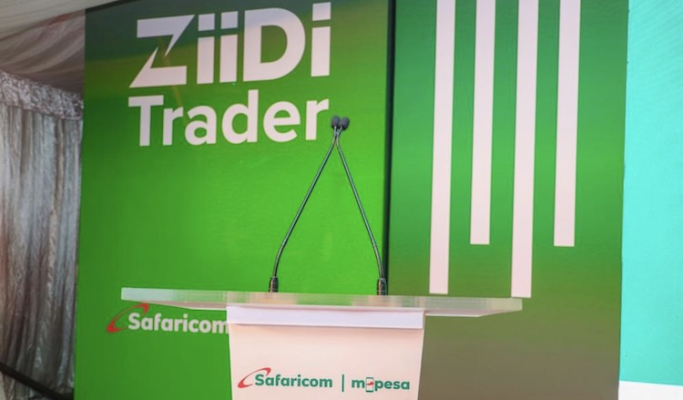
For years, investing in shares on the Nairobi Securities Exchange (NSE) meant paperwork, broker visits, opening a CDS (Central Depository System) account, filling out KYC forms, and linking bank accounts. It wasn’t impossible. But for many Kenyans, it felt complicated, slow, and intimidating. That structure kept retail participation relatively low, even as Kenya built one of Africa’s most successful mobile money ecosystems through M-Pesa. Now, Safaricom has introduced Ziidi Trader, a stock trading feature embedded directly inside the M-Pesa app. With this move, buying and selling NSE-listed shares becomes as simple as sending money or purchasing airtime. This development could fundamentally reshape retail investing in Kenya and expand participation in the capital markets at an unprecedented scale.
What Is Ziidi Trader?
Ziidi Trader is a digital stock trading solution integrated into the M-Pesa app, allowing users to buy and sell shares listed on the Nairobi Securities Exchange directly from their mobile phones.
Instead of opening a separate CDS account in your own name through a traditional broker, users trade through a licensed broker partner in a pooled (omnibus) account structure. Their holdings are reflected in an internal ledger within the app, and transactions are settled through their M-Pesa wallet.
In simple terms:
If you can send money on M-Pesa, you can now invest in shares.
With over 37 million M-Pesa users, this is not just a feature update. It is the integration of Kenya’s capital markets into the country’s most trusted and widely used financial infrastructure.
How Ziidi Trader Works
The process is designed to remove friction while maintaining regulatory compliance.
Step-by-step overview:
- Open the M-Pesa app.
- Navigate to the Ziidi Trader section under financial services.
- Accept terms and complete basic verification requirements.
- Browse available NSE-listed shares with live pricing.
- Select the stock and number of shares.
- Confirm the purchase using your M-Pesa PIN.
Funds are instantly debited from your M-Pesa wallet when you buy shares. When you sell and your order is matched in the market, the proceeds are credited back to your wallet.
Users can monitor their holdings, transaction history, and price movements directly within the app.
Read Also: Why Ziidi MMF Interest Rates Are Falling and How Investors Can Adapt
What Has Changed in Kenya’s Stock Market Access?
1. No Separate CDS Account Required
Traditionally, investors needed a CDS account opened through a licensed stockbroker. Ziidi Trader removes this barrier by using a pooled account structure managed through a broker partnership.
2. Mobile-First Share Trading
Investors no longer need multiple systems. Trading, payment, and portfolio tracking happen in one place — the M-Pesa app.
3. Lower Entry Barrier
Investors can buy shares in small quantities, making the stock market more accessible to first-time retail investors.
4. Faster Settlement Experience
Because transactions integrate with M-Pesa, users experience quicker visibility of debits and credits compared to traditional bank-linked systems.
What Has Not Changed
It is important to understand what Ziidi Trader does not change.
Market Risk Still Applies
Share prices fluctuate. The value of your investment can go up or down. There are no guaranteed returns.
Ownership Structure
Shares are held in a pooled structure. While your beneficial ownership is recorded internally, voting rights and corporate actions may differ from holding shares directly in your own CDS account.
Long-Term Discipline Is Still Required
Convenience does not replace strategy. Successful investing still requires research, patience, and risk awareness.
Ziidi Trader removes friction, not risk.
Why This Matters for Retail Investors
Retail participation on the NSE has stagnated in recent years. Many Kenyans prefer savings products, money market funds, SACCOs, or real estate because stock market access felt complicated.
By embedding stock trading inside M-Pesa, Safaricom is addressing one of the biggest structural barriers: accessibility.
In emerging markets, friction is often the true barrier to participation. When access becomes seamless, curiosity increases. And when curiosity increases, participation can follow.
If even a small percentage of M-Pesa’s user base becomes active retail investors, the impact on market liquidity, financial inclusion, and capital formation could be significant.
Broader Impact on African Capital Markets
Ziidi Trader could become a model for mobile-driven capital market access across Africa. Many African countries struggle with low retail participation in stock exchanges due to:
- Complex account opening processes
- Limited financial literacy
- Geographic distance from brokers
- Perceived elitism of stock investing
Integrating stock trading into mobile money ecosystems could help close this gap.
Kenya has already led Africa in mobile money innovation. If Ziidi Trader scales successfully, it may signal a broader shift toward mobile-native investing platforms across the continent.
Will Convenience Translate Into Long-Term Investing?
The biggest question is sustainability.
Will users invest consistently and build long-term portfolios?
Or will Ziidi Trader drive short-term curiosity and speculative activity?
True wealth creation depends on consistent investing, dividend reinvestment, portfolio diversification, and financial education.
If Safaricom combines Ziidi Trader with strong investor education, transparent pricing, and responsible messaging, it could help build a new generation of disciplined retail investors.
If not, the risk is that users treat it like a trading experiment rather than a wealth-building tool.
Conclusion
Safaricom’s Ziidi Trader represents one of the most important developments in Kenya’s capital markets in years. By placing NSE share trading inside M-Pesa, the company has simplified access to equity investing for millions.
This is not about removing risk.
It is about removing barriers.
If scale meets discipline, Kenya could witness a meaningful shift in how ordinary citizens participate in wealth creation through the stock market.
The structure has changed.
The opportunity is larger.
Now the responsibility shifts to investors.